
AI for NGOs: Automating Without Dehumanizing Your Service
Discover how to use AI for NGOs in a humanized way. Compare RD Station, HubSpot, and CORRE.SOCIAL and choose the best technology to scale your social impact.
The Social Sector Dilemma: Efficiency vs. Empathy
Brazil is experiencing a unique moment in the adoption of artificial intelligence. According to research, 54% of Brazilians already use generative AI, surpassing the global average. This technological optimism, however, faces a delicate paradox in the Social Sector: how can NGOs take advantage of automation's efficiency without losing the essence of human care that defines their missions?
For managers of non-governmental organizations, the challenge is real and urgent. With lean teams and growing demands—only 36% of Brazilian CSOs even have their own website—the promise of AI to "do more with less" seems irresistible. But a legitimate fear arises: by automating service to donors and beneficiaries, wouldn't we be robotizing precisely what is most precious in social work—human warmth?
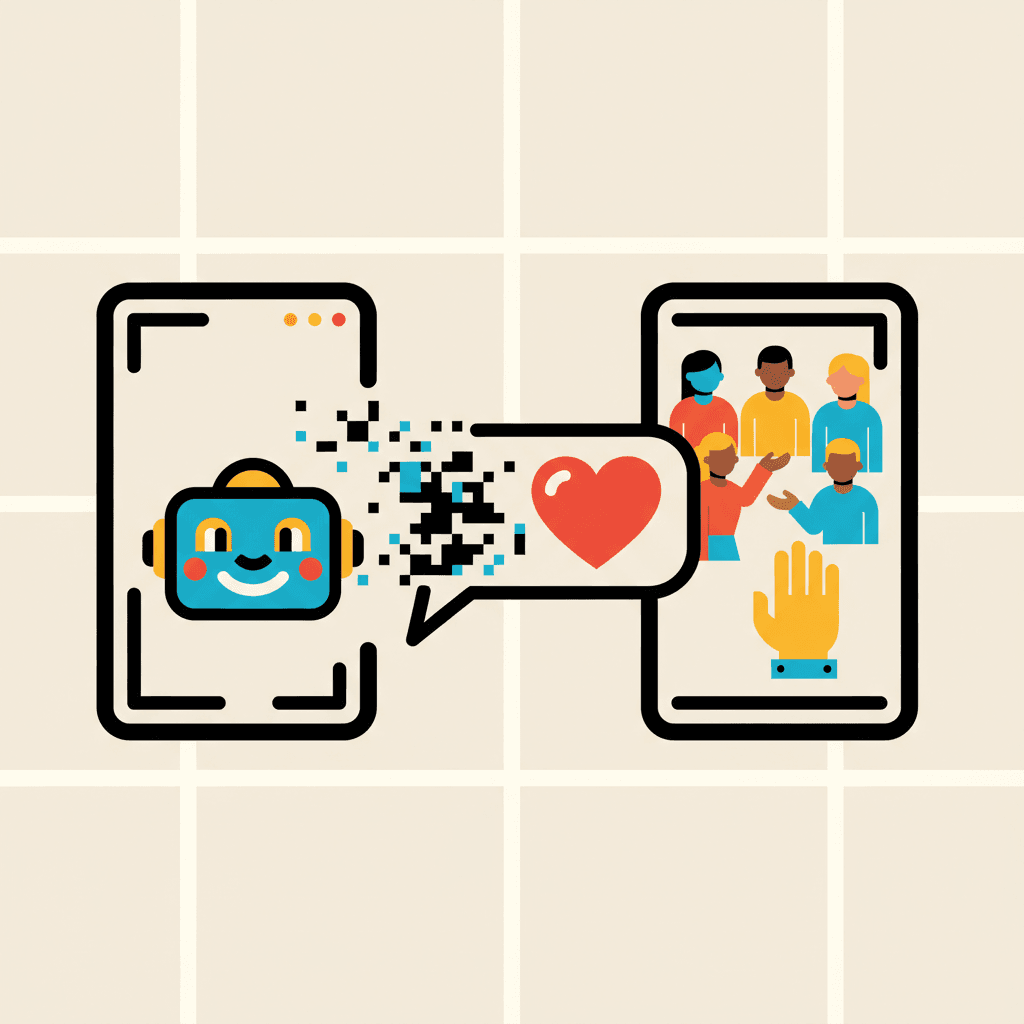
This is where the concept of Humanized AI for social impact arises: technology that does not replace people but multiplies their capacity to care. The key lies in choosing tools that understand the unique context of social causes, transforming conversations into auditable data without losing empathy in the process.
Marketing Giants: RD Station and HubSpot in the Social Sector
When NGOs start looking for technological solutions, it's natural to look first at market giants like RD Station and HubSpot. They dominate the automation and CRM universe, offering indisputable robustness. The question is: were they designed for the Social Sector's reality?
RD Station shines for its consolidated presence in Brazil and excellence in email marketing automation. However, its focus is on commercial metrics: conversion rates, qualified leads, sales pipelines. For an NGO that needs to measure "lives transformed" and not "products sold," this logic creates friction.
HubSpot, in turn, offers a world-class CRM with sophisticated donor segmentation. But the problem is structural: it is a complex tool designed to maximize profit. Adapting its features to measure social impact, manage volunteers, or create auditable reports requires technical workarounds and expensive consulting.
The real bottleneck of these generic platforms is the cost that scales quickly as the contact base grows. For NGOs used to accounting for every cent invested, seeing resources migrate from social programs to software licenses represents an ethical conflict.
Specialization as a Differentiator: The Case of CORRE.SOCIAL
While generic tools try to fit the Social Sector into commercial molds, specialized platforms like CORRE.SOCIAL reverse the logic: they start from the reality of NGOs and governments to design the technology.
The differentiator begins with no-code technology, which allows social workers and project managers to design their own service flows without depending on developers. This is empowerment. The team that deeply knows the beneficiary's journey can translate that knowledge into automations that really make sense.
The second pillar is the transformation of conversations into auditable data. Unlike click metrics or email open rates, CORRE.SOCIAL allows every interaction—whether via WhatsApp, a form, or face-to-face service—to be converted into structured information for impact reports.
But the biggest gain is in the concept of "AI that multiplies": the tool takes care of initial service, FAQs, scheduling, and basic registrations, freeing the social technician for complex cases that really require human expertise.
4 Criteria for Non-Dehumanized Automation
How can NGO managers evaluate if an AI tool is truly humanized? These four criteria are essential:
1. Tone of Voice: Does the AI Speak the Cause's Language?
An AI trained for sales will use transactional language. An AI for social impact needs to reflect care, respect, and the organization's mission.
2. Transparency: Does the Beneficiary Know Who They Are Talking To?
Ethics in AI requires clarity. The person served must know when they are interacting with a robot and when they will be transferred to a human.
3. Fluid Transition: Does the AI Know When to Pass the Baton?
Critical moments—such as reports of violence or emotional crises—require human sensitivity. The ideal tool identifies these situations and transfers the service seamlessly.
4. Ethical Data Collection: Respect for LGPD and Social Sensitivity
Social data are sensitive by nature. The platform must ensure anonymization, allow consent revocation, and offer clarity on data storage.
Practical Comparison: Which Path to Follow?
Scenario A: Large NGO Focused on Selling Social Products
If your organization sells fair trade products or paid services at scale, tools like HubSpot may serve well.
Scenario B: Social Service Scale with Need for Auditability
NGOs that serve thousands of beneficiaries and need to report to government calls or international foundations will find CORRE.SOCIAL the natural choice.
The true cost is not just in license prices, but in opportunity cost: every hour your team spends struggling with a complex tool is an hour not dedicated to those who need it most. Specialization matters.
Conclusion: Automating does not mean dehumanizing. With the right tools and criteria, NGOs can scale their impact without losing the essence of care. The choice between generic and specialized platforms defines who leads the next decade of social transformation.